How to Choose the Right Safety Gloves for the Job
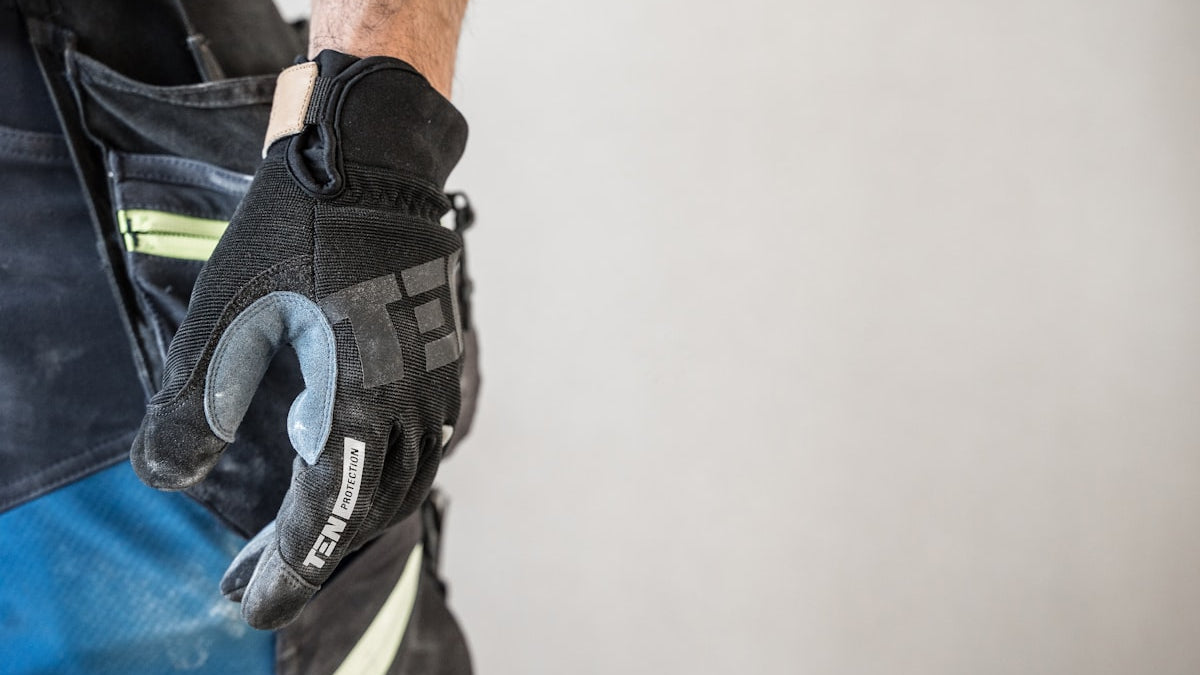
If you've ever grabbed a pair of gloves off a shelf without thinking twice, this one's for you. After 25 years working construction — carpentry, rigging, leading crews — I can tell you that the wrong glove is almost as bad as no glove at all.
Here's how to choose the right pair for your job.
Start With the Hazard, Not the Price Tag
Every glove is built around a specific threat. Before you pick up a pair, ask: what am I protecting against?
- Cut hazards — sheet metal, rebar, glass, steel cable
- Impact hazards — swinging materials, dropped tools, pinch points
- Abrasion — rough concrete, scaffolding, pipe
- Grip requirements — slippery materials, wet conditions, small parts
- Heat or chemical exposure — welding, solvents, adhesives
Most guys in construction are dealing with cut resistance and grip — those are your two biggest factors.
Understanding Cut Resistance Ratings
Gloves sold in Canada are tested against the ANSI/ISEA 105 standard for cut resistance, rated from A1 (minimal protection) to A9 (maximum). For most construction trades, A4 to A6 hits the sweet spot — enough protection without sacrificing feel.
Don't buy A1 gloves for handling rebar. Don't buy A9 gloves for finish carpentry where you need to feel a nail. Match the level to the work.
Grip Type Matters
The coating on the palm changes everything:
- Foam nitrile — best all-around for dry to slightly wet conditions. Good feel, good grip.
- Sandy nitrile — rougher texture, better on oily or wet surfaces.
- PVC dots or full coat — heavy grip for bulky materials like pipe or lumber.
- Latex — excellent grip, but some people have allergies. Know your crew.
Don't Sacrifice Dexterity for Bulk
Thick gloves feel protective, but if you can't pick up a screw or feel a wire, you're going to take them off. And gloves you take off don't protect anything.
Look for gloves with a form-fitting liner and a palm coating that gives you feedback. If you're doing electrical or finish work, thinner is often better — A4 cut resistance doesn't require a thick glove anymore.
Winter Work
If you're working outdoors in a Canadian winter, you need insulated or thermal-lined gloves — but you still need cut resistance. Don't swap one for the other. There are winter-rated work gloves built for both. This is the one area where most guys under-invest and regret it by February.
Replace Them Before They Fail
Check the palm coating regularly. Once it starts cracking or peeling, the grip is gone and so is most of the protection. A worn-out glove that looks fine on the back can be completely compromised on the palm — that's where it counts.
A good pair of safety gloves shouldn't be a one-time thought. It should be part of your site standard.
At Agora Time, all our gloves are CSA-compliant and selected for the kind of work Canadian tradespeople actually do. Browse our full selection here.